



There are so many workers working in the industry, and industrial building safety for workers safety is very important.
The elements that affect industrial building.
- Heavyweight- 2. Weighted carry brackets and supports- 3. Holes for piping- 4. Vibration and Noise- 5. Moving machines- 6. Vapors- 7. Exposure- 8. Radiation- 9. Fatigue
1. Heavyweight
Heavy weight on the industrial building can be very dangerous for the building. It decreases the life of the building and increases the risks of collapse. The cross-metal bridge for the support of pipes is not safe to be put on the building’s wall. For this purpose, a support made with metal pipes should be used from the ground to carry weight.
2. Weight carry brackets and supports
Brackets and supports with walls and under the roof for carrying the weight of pipes and other objects should be used safely.
3. Holes for piping
Necessary or unnecessary holes in the building’s roof or walls make the building structure weak. The proper brackets or iron-made frame should be fit in the walls for building safety betterment. We can use concrete beams for this purpose.
4. Vibration and Noise
Vibrations of heavy machines can collapse the building. Because vibrations affect the foundation and structure of the building by making cracks with time. We can control these issues by controlling the vibration of the machines and following these instructions:
- Use the flexible iron rods in the building structure and iron rod-made floor beds for machines.
- Don’t connect directly the machine’s connected pipelines with the roof or walls because the vibration of machines transfers to the walls and roof through these pipelines.
- Always use insulation or foam-type material around the lines at the point that connects to the roof or walls.
- Use flexible joints or rubber bellows at the pipelines that are connected to the machine.
5. Moving machines
Moving machines are commonly hit by buildings when working. Piller corners and doors can damaged when moving machines hit them. For pillars and building’s corner’s safety:
1. Metal putty or metal angle should be grout around the corners.
2. Metal sheets should wrapped around the corners.
3. Grills of metal pipes should be grouted around the pillars and in front of the walls.
6. Vapors
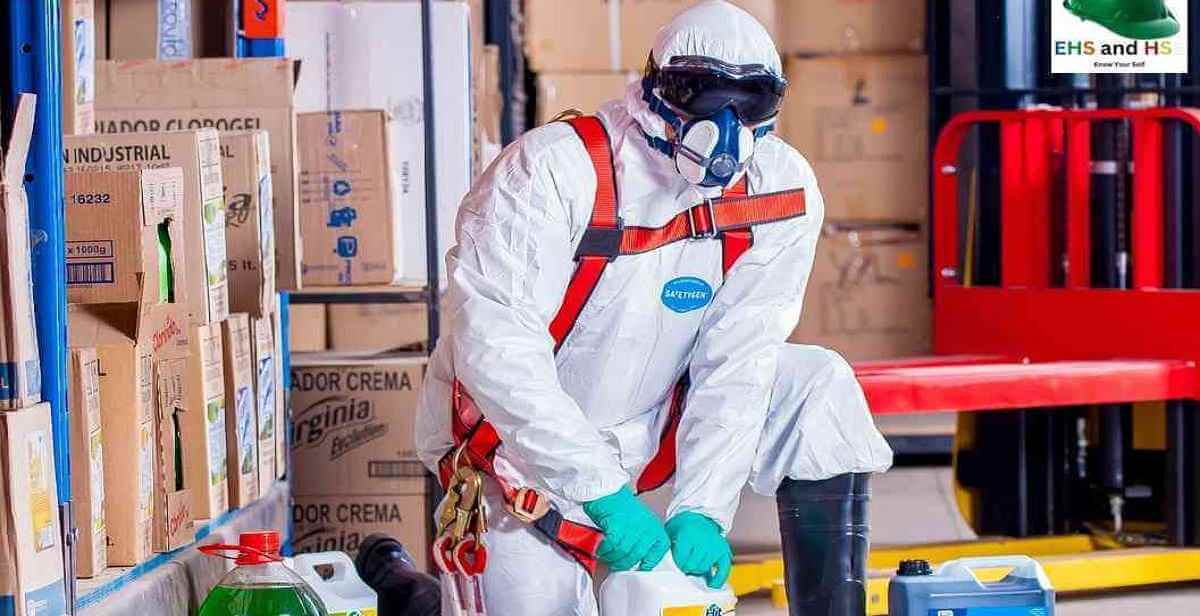
Industrial building safety is very important when industrial buildings are used for chemical storage or used in the building.
- Corrosive chemical vapors, such as those containing acids or corrosive gases, can damage the metal components of a building. This can weaken the structural integrity of the building over time. Corrosive vapors can also affect electrical systems within a building.
- Certain chemical vapors may react with building materials, leading to their deterioration. For example, vapors from acids and chemicals can react with the paint, sealants, and concrete.
- Chemical vapors can cause discoloration of building surfaces. This can be particularly evident on exterior walls, facades, and other exposed surfaces. For instance, sulfur-containing compounds can cause dark stains or discoloration.
- Odor Permeation from chemical vapors can permeate building interiors, affecting indoor air quality and workers’ comfort. This can have bad effects on the building.
- Some chemical vapors can contribute to the deformation of building surfaces. Salts that can appear as a white, powdery substance on walls and other masonry surfaces.
7. Exposure
Buildings of industrial areas or subjected to chemical spills may face exposure to corrosive or hazardous chemicals. This can lead to material degradation and discoloration. Exposure to ultraviolet (UV) radiation from sunlight can cause fading and degradation of exterior finishes, paints, and sealants. The weather conditions such as rain, wind, sunlight, and temperature fluctuations can affect the building. Prolonged exposure to moisture, through rain, humidity, or leaks, can result in building damage. This may include rotting of wood, mold growth, and deterioration of building materials.
8. Radiation
Solar radiation, primarily in the form of sunlight, can have several effects on buildings:
Thermal Expansion: Sunlight can cause materials to expand and contract due to temperature fluctuations, leading to stress on building components. Ultraviolet (UV) radiation in sunlight can cause fading of colors in paints, fabrics, and other materials over time. Ionizing radiation, such as gamma rays or X-rays, can potentially have damaging effects on building materials and electronic systems. Radiofrequency (RF) Radiation from sources like cell towers or communication devices can have minimal direct impact on buildings. Nuclear Radiation can cause incidents, buildings may be exposed to radioactive particles and fallout. Electromagnetic radiation is typically at low levels and does not directly harm buildings.
9. Fatigue
Industrial buildings are used for 24 hours commonly and the element of fatigue can affect these buildings. When designing these buildings this factor is considerable.