Driving safety/Defensive driving Driving is a very common and important activity then it is important to understand driving safety. Some People are always and continuously in the situation of driving. That’s why most people are affected by road accidents. Every year many people die or are victims of serious injury in road accidents. Some factors … Read more
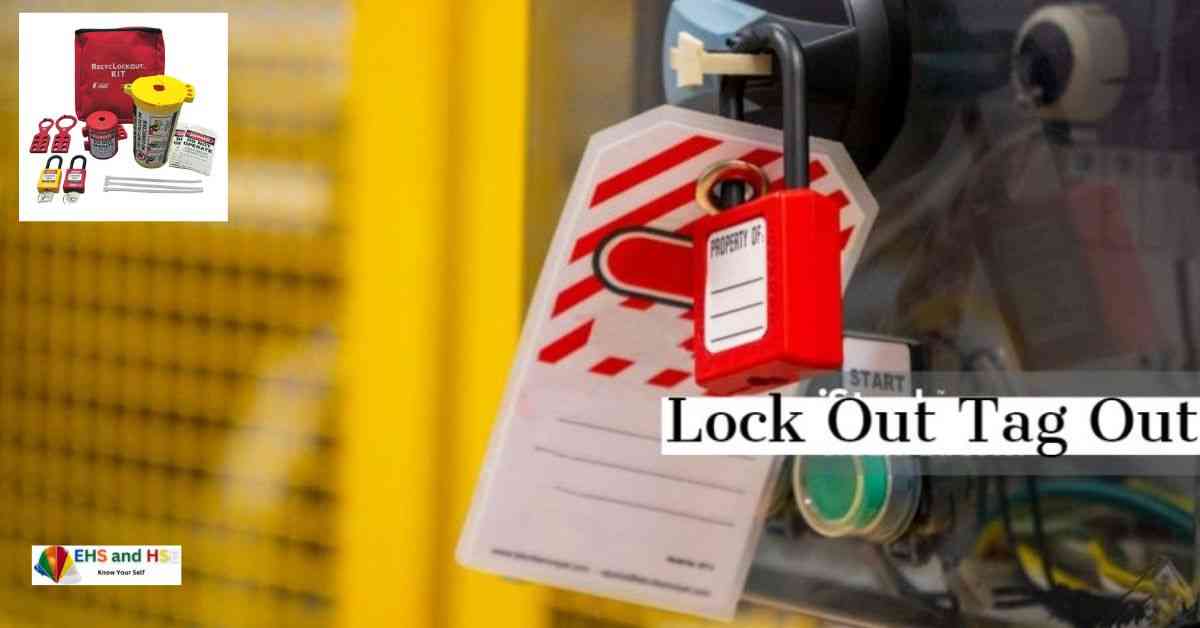
Lock out tag out (LOTO) is a procedure, that applies to the machine before starting maintenance on the machine. in this procedure, cut off or close all power sources and hang relevant instruction tags on all power sources to make the machine safe for maintenance and engineering work.
As you can understand, lock-out and tag-out are two words. If the equipment is locked at a close position it means Lock-out. Anyone can’t change the position of this equipment without the key. Second, hang the instruction tag at the lock. Instruction shows why locked this equipment and anyone can’t try to change the position of this equipment. Tag-out warnings to employees not to use this equipment.
Importance of Lockout Tag-out
When mechanics work at the machine they shut off the machine they do not lock out and tag out the machine. In this case, other people who don’t know about mechanics activity at the machine. They switch on the machine this is very dangerous for mechanics. A safety process is very necessary to prevent incidents like this.
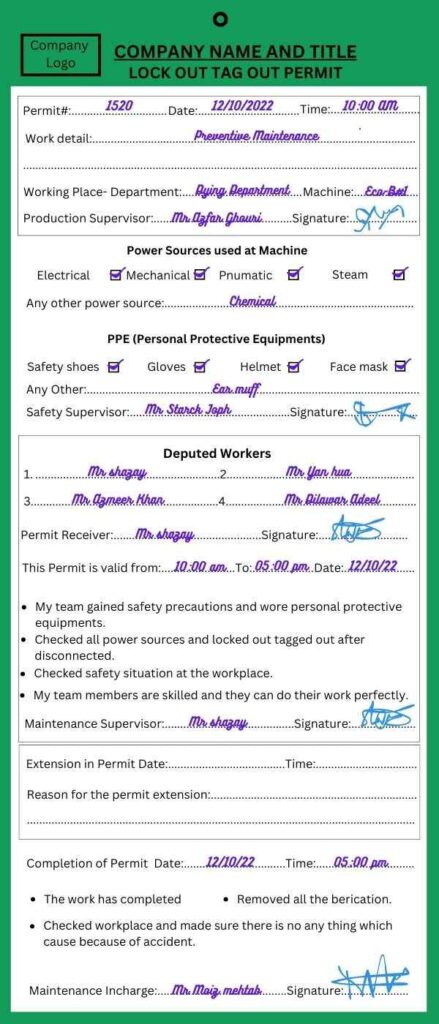
Color Identification Green color used for LOTO permit identification.
Logo and Title Company Logo and Company Title with the type of permit placed at the top.
Management Section They are mostly managed by the cooperation of engineering and production management.
Power Sources and Safety Checklist A safety supervisor checks and ensures the lock of all power sources and tags all locks.
Deputy Worker This section is only related to Engineering Management. A supervisor checks and signs it.
Extension of Permit Date Engineering management fills this section if maintenance is not completed. In case of any reason. The extension date, time, and reason should be mentioned on it.
Permit Completion Maintenence supervisor checks the maintenance and signs after the permit
Important Note: Permit filling name is temporary not expected name. If any name matches the actual name I apologize.
LOTO kit
Procedure / Training
Prepare for shutdown or maintenance
First, inform the machine or device-related department like processing, boarding, or finishing. Manage maintenance time and date with the supervision authority of this department.
Notify all employees of the activities and equipment involved.
Notify all employees about machine or equipment maintenance or shutdown. Inform about the date and time. Because any worker doesn’t start the machine during maintenance. This is very important for the safety of workers and machines.
Shut down the equipment.
Shut off the power of the machine and all power sources. Shut off the main electric breaker, close the steam inlet valve, close the compressed air valve, and close the water inlet valve.
Isolate the equipment from the hazardous energy source.
Close all energy sources of the machine or equipment.
1. Electrical power
2. Mechanical Power
3. Steam power
4. Compressed air
5. Hydraulic power
Dissipate residual energy.
Dissipate residual energy like steam and compressed air stored in pipes, tanks, and heat exchangers.
Apply applicable lockouts or tagout devices.
Properly lock out all valves and devices after closing them. And tag them with related information tags.
After getting the work order to fill out the work permit (Lock out the Tag out permit). Start closing all power sources one by one. These power sources are used in machines.
Electrical Power
Mechanical Power
Steam Power
Pneumatic Power
Chemical Power
1. Electrical Power lock
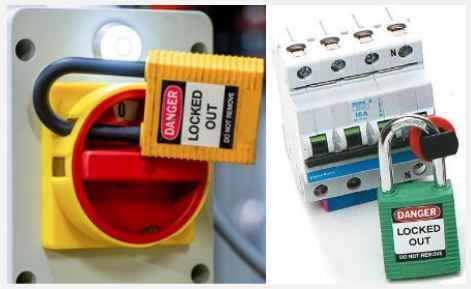
Shut off the electrical breaker then insert the lock device pin through the breaker’s body hole and breaker’s knob hole. If the device controls the knob motion then you should lock the device with a padlock.
2. Mechanical Power
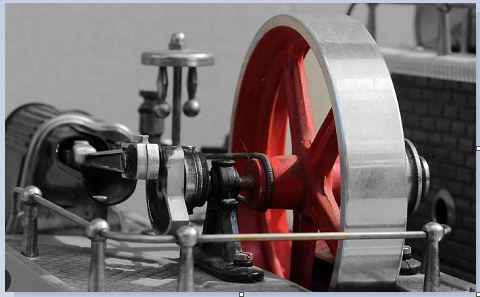
Mechanical power means the motion of the flywheel, gearbox, and stored power. Stored power can cause the reason for the movement of machine parts. ensure that the machine stops before starting work.
3. Steam Power
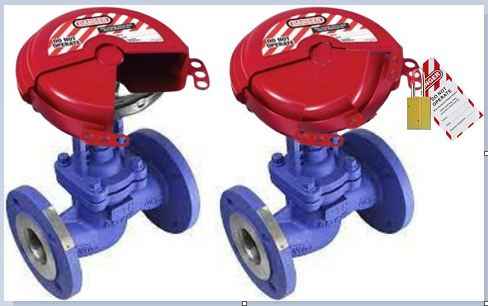
Steam power is also a very dangerous power source. For the main steam line, mostly use the globe valve for the steam connection. Close the steam power valve gently. Fit the globe valve cover device and lock the device. The device’s sides have holes for the padlock rod.
4. Pneumatic Power
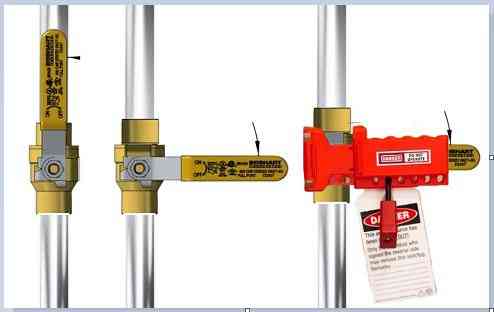
If Ball valves or any other type of valve is used in the pneumatic line. Close the valve. Subsequently, close the device at the handle of the ball valve at a valve close position. The device controls the movement of the valve handle. then lock this device and hang a tag at the lock.
5. Chemical Power
Chemical power is only used in a specific type of machine. The machines which have dye, bleach, wash, and chemical processes use chemical power. Close the valve of the chemical line, lock it out and tag it. Ball valves are used in chemical lines.
Close Water Supply
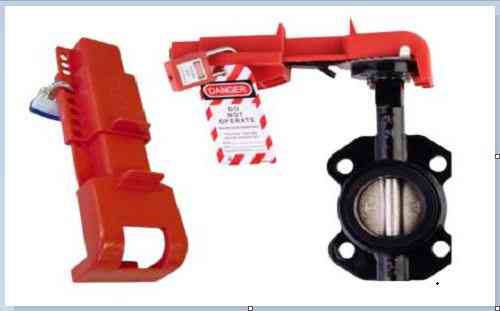
A butterfly valve or any other type of valve first closes the valve. During the lock-out and tag-out process, close the main supply line of water. The butterfly lock-out device is the same as the ball valve lock-out device.
A work order is a form of work procedure structure, parts, and accessories used during this work. In this form, a task or job that needs to be work. This form records the maintenance of the machine in the industry and works at the site in construction.
What is a Maintenance Work Order?
A Maintenance Work Order is a formal document or digital record used to initiate, document, and track the maintenance, repair, or servicing of equipment, facilities, or infrastructure. It serves as a communication tool between different departments, such as operations, maintenance teams, and management. To ensure that maintenance tasks are completed efficiently and systematically.
Example of a work order
Maintenance of the machine and installation of the new machine in the production system. Work on equipment with details of checkable points and work procedures. This is a strong example of a work order.
In these examples, everything is preplanned and the work order is a preplanned document to perform these works.
Maintenance Work order format and its sections
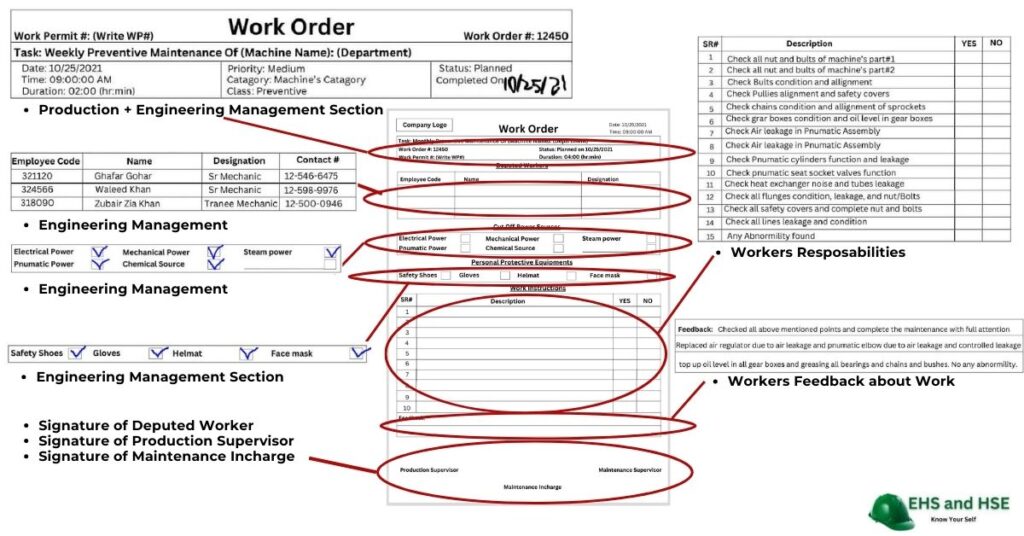
You can divide this form into different sections for understanding and effective use. As shown in this image, all sections are necessary and important to make this an effective template document that fulfills your needs which you want to mention on it. The maintenance forms are downloadable and printable.
Work Order Division in Sections
Section #1 (Production + Engineering management )
This section is only about the nature of the work: This section has the type of maintenance and nature of the work.
Schedule Date and Time: The timeline for when the work should be performed. Work Order Number is a unique identifier for tracking and reference. Requestor information is the person or department requesting the work. This Section is designed for the cooperation of both the production and engineering departments.
Equipment or Location Details: Specifies where the maintenance is to be performed or which asset needs attention. The department where the machine is installed or work to be done like the production department. The department which needs to work on machines like Electrical and Mechanical.
This section is about how Deputed Workers are only dependent on Engineering Management. Assigned personnel: to the technicians or teams responsible for completing the task. The person in charge of the department knows the ability of the worker who works under his supervision. In charge deputed the task-related skilled worker for completion of the task.
Section #3 (Engineering Management + EHS/HSE)
Before starting work check the power sources and cut them off. Ensure the engineering management person cuts off all power sources before beginning work.
Section #4 (Engineering Management + EHS/HSE)
This section is about safety checks in the form of PPEs. The EHS department checked the list of PPEs (Personal Protective Equipment) used during the completion of the task.
Section #5 (Workers Responsibilities)
This section is about machine parts that need to be checked. The description of the Task is a detailed explanation of the maintenance work needed. Details and description of all work in case of checklist one by one checking and fault rectification is the duty of deputed worker.
Section #6 (Workers’ Feedback about Work)
The workers completed the task after checking all the mentioned points in the work detail section. They know about the condition and faults of each part. They should write the details about work done in feedback for the next work plan and keep the record.
Section #7 (Signature evidence about work)
After completing the task, seniors check it and make a signature on the form.Completion Status: A field to document progress or mark the task as completed. Approval Section: Signatures or digital approvals from supervisors or managers.
Possible Section (Engineering + Store Management)
Some templates include this section for better and more effective communication. Materials and Tools Required: Any parts, supplies, or equipment needed for the job. This section of the spare parts store records spare parts consumed during the completion of the work. Like machine parts that changed due to being out of order or rusty issued from spare parts store.
Types of Work Order
industry type in this document.
1. According to Time
Daily Work Order
Weekly Work Order
Monthly Work Order
Yearly Work Order
2. According to Job
Fulltime
Part-Time
Casual
Fixed-term contract
Apprenticeship
Traineeship
Internship
3. According to Need
Corrective Maintenance Work Order
Preventive Maintenance Work Order
Fortnightly Maintenance Work Order
Purpose
The purpose of this form is to manage the work with the cooperation of different departments. Work orders are effective for these points.
Ensures clarity in communication and task delegation.
Tracks the history of maintenance activities.
Enhances resource planning (tools, personnel, and materials).
Improves asset reliability and minimizes downtime.
Provides documentation for compliance and audits.
Maintenance Work Order Template
Here are some Maintenance Work Order samples that you can easily download and print for your further use.
Here are some templates you can design for yourself. And use them in your work routine in industry and construction work. This is the printable maintenance work order.
You can download these Templates by clicking on the download button.
How do you manage your work?
Based on your industry, site, and work conditions, you can design this form for effective use. When you design a work order form for your desired work, you should know everything about your work.
Work Order Management
The management of this form is the only duty of the Engineering Department to make it the record of work. So much software on the market to manage this type of form. Some companies have their own ERP system to manage these works and keep the records.
Work order vs work permit
Here are some differences between work orders and a work permit although both documents are part of the Lock Out Tagout work procedure.
Work Order
Work Permit
This document is part of the Lock out Tag out work procedure
This document is also part of the lockout tagout work procedure
Work orders are decided after cooperation with the production department
Work permit decided by the on-duty responsible engineering person
Work order is an earlier step to work
The work permit is a post-step to work
A work order is a document that authorizes and details a specific task or set of tasks to be completed. It is essentially an instruction or request for work to be carried out.
A work permit is a document that grants permission to perform a specific type of work, especially when it involves potential hazards or requires adherence to strict safety regulations.
It is used for routine maintenance, repair jobs, installation, or any task that needs to be tracked and managed.
This includes details such as the nature of the work, location, potential hazards, safety measures, required protective equipment, emergency procedures, and the duration for which the permit is valid.
Includes details like the nature of the work, location, time frame, materials needed, labor requirements, and any special instructions or specifications
Includes details like the nature of the work, location, potential hazards, safety measures, protective equipment required, emergency procedures, and the duration for which the permit is valid.
Issued internally within a company by a manager or supervisor to a technician, maintenance team, or service provider.
Issued by a safety officer, site manager, or any authorized personnel responsible for overseeing safety compliance.
Organizations often use Computerized Maintenance Management Systems (CMMS) to create, manage, and store work orders electronically for improved efficiency and tracking.
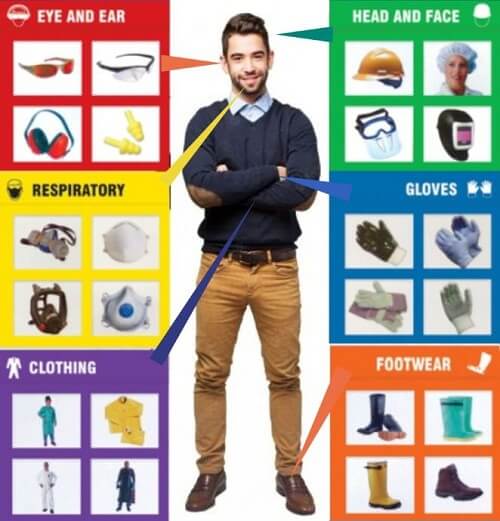
The importance of PPE and its uses is to improve occupational safety. It is important to know about the personal protective equipment PPE and its uses. Always remember “Be first safe then work”. Safety is important for each work and the responsibility of each worker. A worker doesn’t have to know how to complete this work. It’s important to know how to complete the job safely so that the workers can save themselves and others from hazards.
Importance of PPE and its uses
Our body parts are the precious gift of nature, so we should take care of our body parts. Every activity we perform in our lives is possible due to our body parts.
PPE Hazard Matrix
The PPE (Personal Protective Equipment) Hazards Matrix is a tool designed to help identify and evaluate workplace hazards. Ensuring appropriate PPE is selected according to the risks. This matrix helps you to select the PPE for your safety according to the hazard and.
Key Elements of the PPE Hazards Matrix
Hazard Categories:
The matrix lists common types of workplace hazards, often divided into categories such as:
Physical Hazards: Noise, vibration, temperature extremes, impact, falling objects.
Chemical Hazards: Exposure to corrosives, solvents, gases, or other toxic substances.
Biological Hazards: Pathogens, viruses, bacteria, or mold.
Radiation Hazards: UV, X-ray, or other ionizing/non-ionizing radiation.
Ergonomic Hazards: Strains due to repetitive motion or poor posture.
Hazard Description:
Detailed descriptions of each hazard, including the conditions under which they occur, the severity of potential harm, and the duration of exposure.
Recommended PPE:
Specific PPE is recommended to address each hazard. Examples include:
Head Protection: Hard hats for falling objects.
Eye and Face Protection: Goggles or face shields for chemical splashes or flying particles.
Hearing Protection: Earplugs or earmuffs for loud environments.
Respiratory Protection: Masks or respirators for inhalation hazards.
Hand Protection: Gloves resistant to chemicals, cuts, or heat.
Body Protection: Aprons, lab coats, or flame-resistant clothing.
Foot Protection: Steel-toed boots or slip-resistant footwear.
Risk Levels:
Some matrices include columns or rows to indicate the risk level (e.g., low, medium, high) associated with each hazard, guiding the selection of PPE with sufficient protection.
Control Measures:
Incorporates the hierarchy of controls, emphasizing that PPE should be the last line of defense, after engineering, administrative controls, and safe work practices have been implemented.
Special Considerations:
Factors like environmental conditions (e.g., wet environments), compatibility with other PPE, and worker comfort are sometimes included.
Benefits of the PPE Hazards Matrix
Systematic Approach: Ensures all potential hazards are reviewed.
Customization: Allows tailoring to specific industries or jobs.
Efficiency: Streamlines PPE selection and training processes.
By following the matrix, employers can ensure that their workers are adequately protected while promoting safety and compliance in the workplace.
Specifically, when we work in a factory we face many hazards like acidic liquids, hazards of machines, and fire hazards. In this case, if we do not use PPE it could be dangerous for us and cause death or serious injury. Our body parts could be partially or completely affected.
When we discuss PPE and its uses, showing details of PPE is very necessary
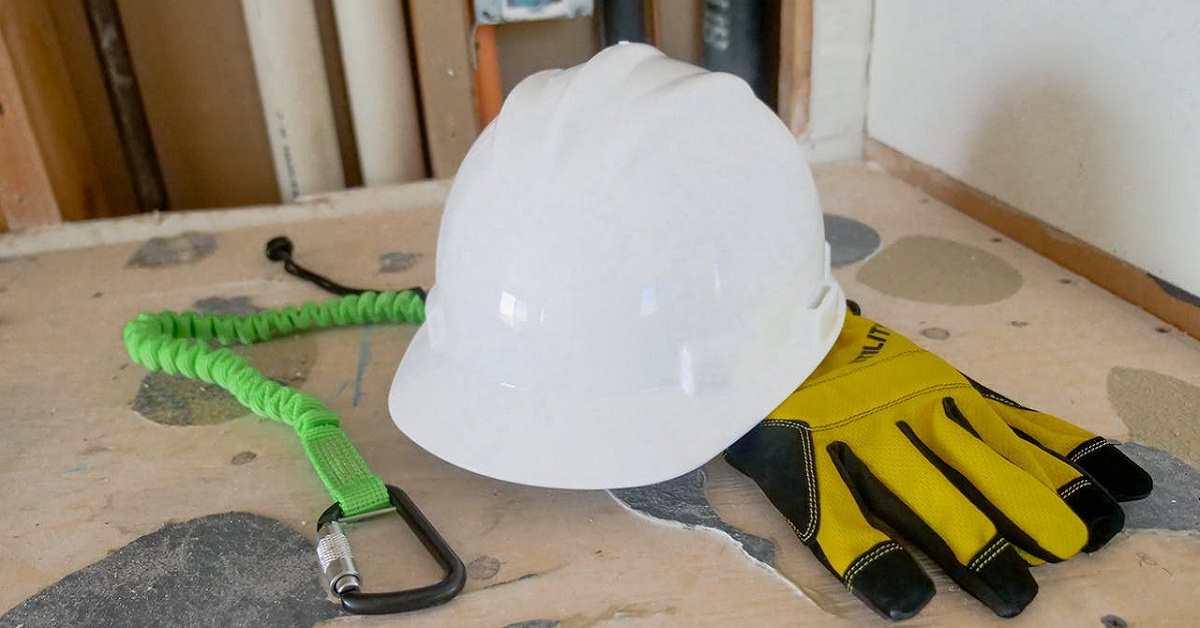
Safety Helmet
Our head is the most sensitive and fragile part of our body. Serious injuries to the head can cause death. In workplaces where hazards of something falling, something hitting, and standing or sitting in narrow spaces can cause a head injury, the helmet is very necessary in these cases. Make it your habit while working in hazardous places. (For more details about safety helmets)
Gas Mask/Dust Mask
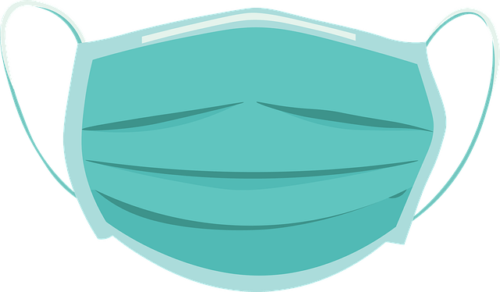
In all places where hazards of fluff, dust, and smoke, the face mask is very necessary. In all places where hazards of dangerous gases, chemical vaporization, and fumes, the gas mask is very necessary. There are two types of gas masks: 1. Full face mask 2. Half face mask. (for more details about masks)
Cover all
While working on machines always wear fitting, coverall, and active wear clothes. A loose dress can be dangerous while working on a machine that has moving parts. For this type of work, always wear the company’s recommended dress. (For more details about coverall)
Safety Gloves
That’s why our hands are more related to our work so our hands face more hazards and could be injured. The hazards that affect our hands like sharp edges, crashes between two parts, burning by heat, chemical reactions, and electric shocks are common in industries and homes. To protect our hands from these hazards, use appropriate gloves according to the work. (For more details about safety gloves)
Safety Shoes
While working to protect your foot from the hazards of hitting parts and pouring hot melts and chemical hazards, always wear safety shoes. There are several types of safety shoes according to workplace risk assessment there are available in the market. 1. Metal toe shoes for mechanical work 2. Long rubber shoes for chemical work 3. Rubber shoes for electric work (For more details about safety shoes)
Spectacles/Goggles
While we are working, our eyes continuously open and focus on the working point, that’s why our eyes face some serious hazards. Always wear safety goggles or face shields, which should be used according to work conditions. Like: 1. Face shield or colored goggles for welding work 2. Closed goggles for chemical handling 3. Face shield for grinding and cutting (For more details about spectacles and goggles)
Ear Plug/Ear muff
In a workplace where the noise and noise can affect the ears, the ear plug or ear muff is very important to wear. If the noise frequency is 85 decibels then ear plugs and ear muffs are necessary to wear. The ear plug or ear muff is recommended by the doctor after Audiometric tests. (For more details about ear plug/ear muff)
Safety belt
A safety belt is a specific-shaped belt cross with a long strap with a metal hook. While working at more than 6 feet in height, the hook is gripped to a stationary bar or other object for safety in case it slips. It saves the worker from falling to the floor. The length of the belt should be less than your height. (For more details about safety belts)
SCBA (Self-Contained Breathing Apparatus)
In workplaces where there is less oxygen and the risk of hazardous gases, SCBA is very necessary for workers for artificial breathing. For example, storage tanks, trenches, ducts, vessels, etc. SCBA saves the worker from some unexpected incidents. (For more details about SCBA (Self-Contained Breathing Apparatus)
PPE means Personal Protective Equipment. PPEs are physical objects that you use to protect yourself from hazards. PPEs protect your body parts while working in hazardous workplaces. Safety helmets protect your head, safe shoes protect your feet and gloves protect your hands. The importance of PPE and its uses are described in detail above.
What are 4 pieces of PPE?
4 types of PPE to protect your main 4 body parts.
Safety helmet for head safety.
Safe shoes for foot safety.
Gloves for hand safety.
Goggles/face shield for eye safety.
Why is PPE important?
Personal Protective Equipment (PPE) are items you can wear/use to protect your body against various hazards. Without PPEs, any incident can affect your body in case of injury or disability. PPEs are important because they prepare you for health and safety risks and give you extra protection and mental satisfaction in the event of an accident or against the elements.
What standard of PPE is required?
The OSHA standard 29 CFR 1910.132 presents PPEs for industry workers
OSHA (Occupational Safety and Health Administration) according to regulation 29 CFR 1910.132. PPEs are very essential in the general industry for the protection of employees. PPE and its user training are also held by OSHA.
face shields, gloves, glasses, goggles, gowns, head coverings, masks, respirators, or shoe covers.
Machine Operator PPEs
gloves, glasses, goggles, gowns, helmets, masks, respirators, or shoe covers.
Mechanical worker PPEs
Cotton gloves, Safety helmets, Safety shoes, and masks.
Hot work PPEs
face shields, welding gloves, welding goggles, masks, and safety shoes.
Grinding work PPEs
face shields, gloves, glasses and goggles, masks, and safety shoes.
Electrical worker PPEs
Electric gloves, Rubber mate, Rubber shoes, masks.
What is the full name of PPE?
PPE (Personal Protective Equipment).
What are two common types of PPE?
Safety shoes
Safety helmet
What are the 3 types of eye protection?
Face Shield
Glasses and goggles
Black glass welding face shield
How should PPE be used? or How do you put on PPE step by step?
Start wearing safety shoes.
Don’t wear torn shoes.
Then wear a safety helmet.
Don’t use a Brocken chin-strip helmet.
Wear gloves as per the required type.
Don’t use torn or heavily contaminated gloves
What is PPE training?
Training Description: This training covers the general requirements for Personal Protective Equipment. The importance of PPE is the slogan of our training.
Mechanical PPEs
Steel toe safety shoes and appropriate gloves and helmet with chin strap.
Electrical PPEs
shock-protective and arc-resistant (AR) clothing. * Maintain, inspect, and test electrical PPE.
Chemical PPE.
Every trainer focuses on the importance of PPE and its
Who is responsible for PPE?
Employers Must Pay for Personal Protective Equipment (PPE) Employees Must wear Personal Protective Equipment (PPE)
What is the color code for safety?
Safety Signs Color Code
Mandatory signs are blue
Prohibition and fire safety signs are red
The warning signs are yellow
first aid and emergency exit signs are green
Apron color code
The first aider’s apron is green
The firefighter’s apron is red.
The floor warden’s apron is yellow.
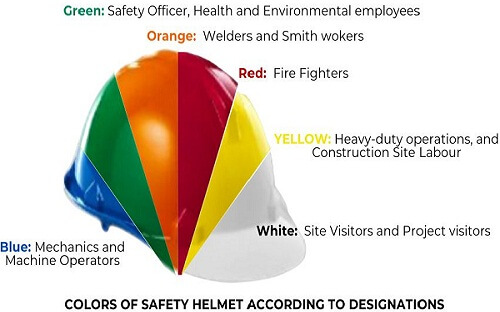
Safety Helmet Color Code
Yellow for Construction site workers and heavy-duty operators
White for site engineer, supervisor, and visitors
Blue for mechanics and machine operators
Red for firefighters
Green for safety officers and health and environment engineers.
First, remove aprons or body harnesses. Second, remove goggles or face shields. Third, remove the safety helmet. Fourth, remove gloves and wash your hands with soap. At last, remove the safety shoes.
Which PPE should be removed first?
Approns or shoes cover or body harnesses and even safety helmets. For this, they should be trained in PPE and its uses.
Putting the right thing in the right place is called housekeeping. Housekeeping is a very important pillar of safety. workplaces and departments where housekeeping is not maintained. Hazard’s chances increased. Bad housekeeping where it increases the chances of fire hazards whereas good housekeeping puts away fire hazards. A famous Japanese method of housekeeping gives us … Read more
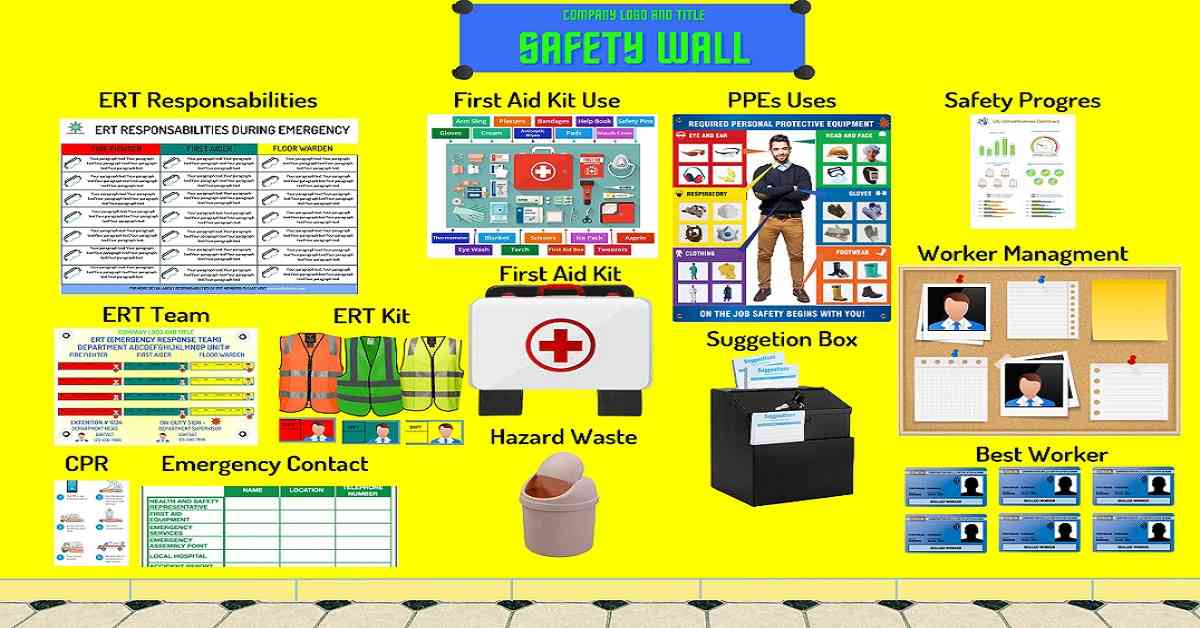
The Safety and Well-being Wall is a wall in your workplace like industries, multinational companies, and offices. The EHS department assigns this wall. Notices are posted on this wall to provide information, give instructions, and be aware.
Examples of this wall
When we go to the city, we see different places where people assign the wall as a charity wall. People put their unneeded things in front of this wall or hang them on the wall’s hanger. As in hospitals and dispensaries, a wall is assigned for a health wall. They are creating awareness about health issues. In industries, a wall is assigned for the safety and well-being wall. for awareness of workers’ safety and safety status.
Type of Wall
Locations
Key Elements
Charity Wall
Different places in the city
Unused items for people that another person can easily pick from here.
Health Wall
Hospitals and Dispensaries
Posters on health issues
Awareness Wall
Different Stations like airports, railways, etc.
Sessional disease information, safety threats, etc.
Information Wall
Stations, call centers, media houses, etc.
Information for employees, visitors, and contractors
Safety and well-being wall
Industries and factories
Safety awareness and safety items for industry workers
The Importance of Prioritizing Employee Safety and Well-being
Employees are the main strength of the Industry to make it functional. The safety and well-being of employees is very important and a reasonable action. Providing PPE and safety gear is the responsibility of employers for the betterment of work and efficiency.
Key Elements to Include in Your Safety and Well-being Wall
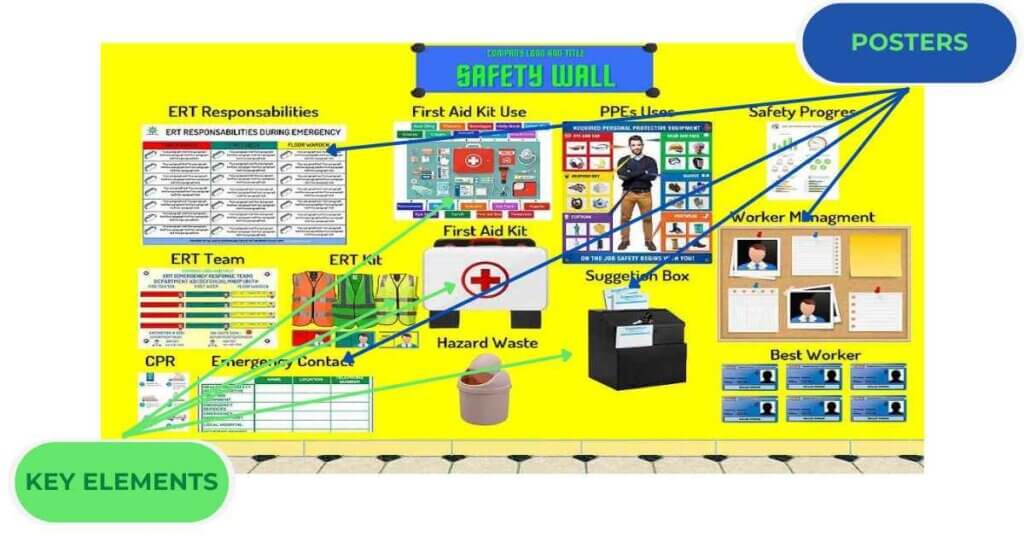
Key elements and posters are available related to workplace safety conditions and the nature of work. Different work conditions or departments have different elements and posters to be aware of for the safety of employees.
The selection of a safety wall is a significant factor because you want to convey your message to each employee. The entrance point is a commonly important point for the notice board. A wide area should be available in front of the safety and well-being wall. To easily stand for employees. While they read and understand the safety wall’s posters and key elements.
Importance of the Safety Wall.
Safety and well-being wall in industries and offices. Health and wellness walls in hospitals and dispensaries. Charity walls in societies and around cities.